Every job below is one we do ourselves across Milwaukee.
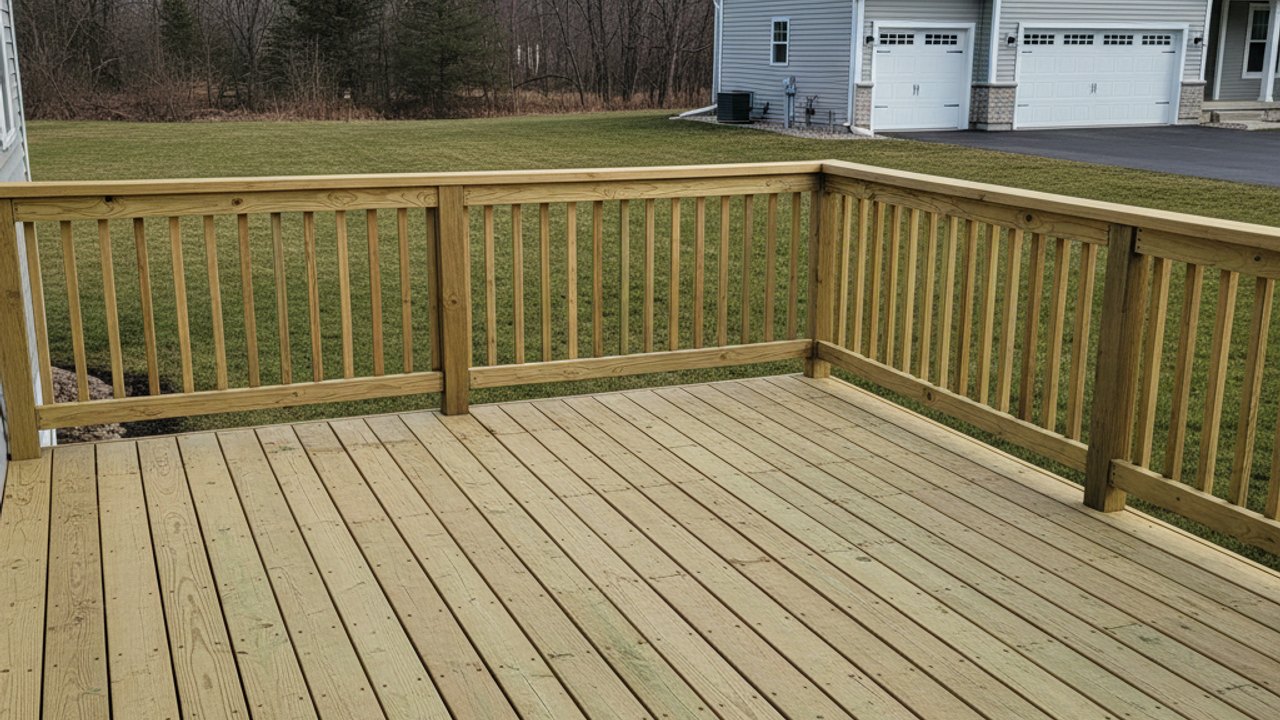
We frame new decks on concrete footings poured below Wisconsin's frost line, usually 42 inches down, so the structure doesn't heave when the ground freezes and thaws. Joists run 16 inches on center for standard decking, closer for composite or if you want tile. We handle the layout, the ledger flashing, and the inspection.
Most repair calls start with a soft board, a rotted ledger, or a railing that moves when you grab it. We pull the bad section apart to see how far the rot or the rust has traveled before we patch anything. Sometimes a repair is really a sign the whole substructure needs replacing, and we'll tell you which one it is.
Bare wood grays and starts to splinter within a year or two in Wisconsin sun and rain. We pressure-wash first, let the boards dry for a couple of days, then apply a penetrating stain or sealer rated for our freeze-thaw cycle. Solid stain hides more, semi-transparent shows the grain, and we'll tell you which one suits the wood you've got.
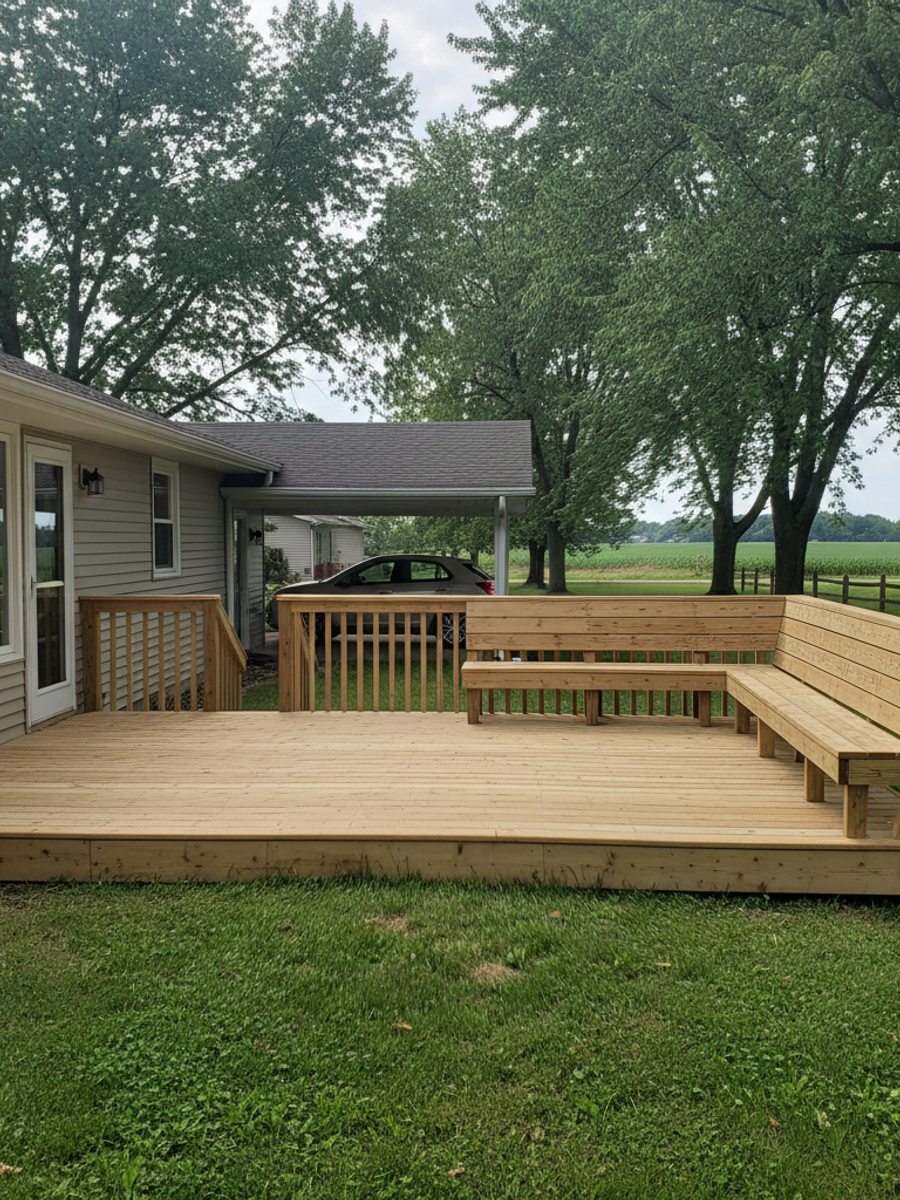
Some decks just need to be a rectangle with stairs. Others need a lower patio-level deck, built-in seating, a pergola over part of it, or a layout that works around a big tree or a slope in the yard. We sketch it out and price the options before anyone commits to a design.
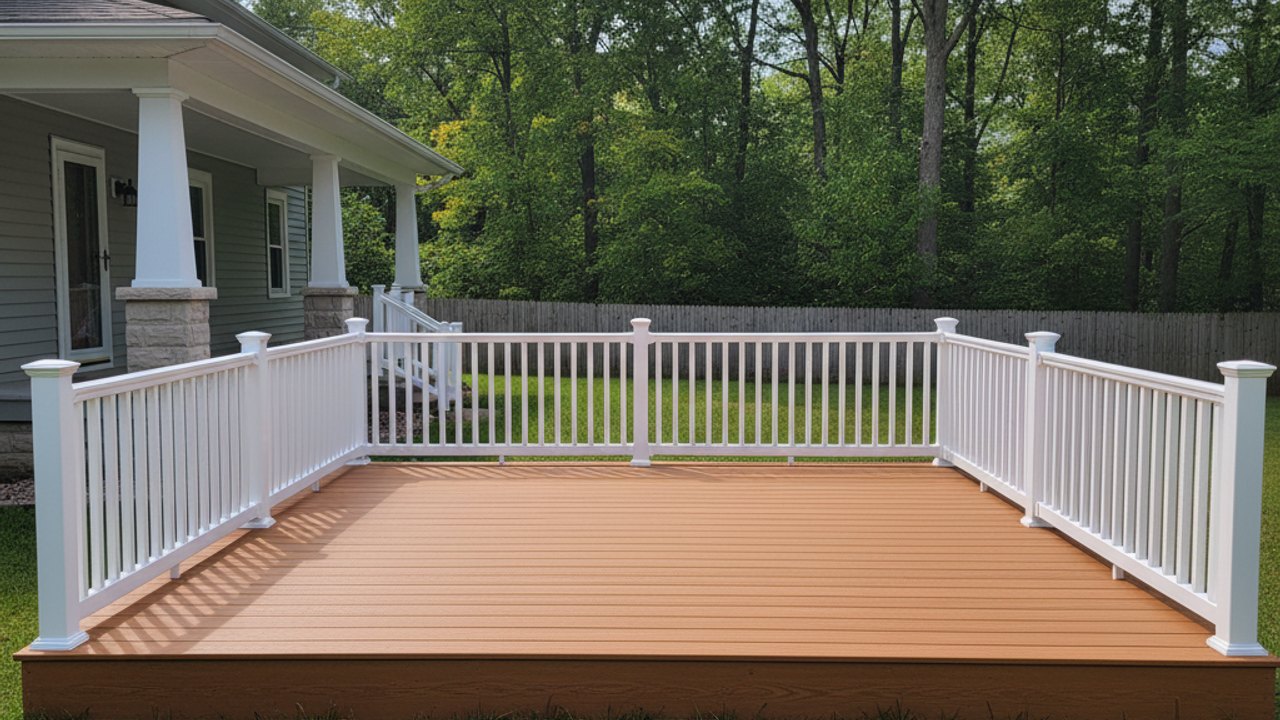
Composite boards like Trex or TimberTech don't rot and don't need staining, but they still need the framing done right underneath, including proper spacing for expansion. We use hidden fastener clips so there's no screw heads showing on the walking surface. It costs more than pressure-treated pine, but it's close to maintenance-free for the next 20 years.
Building code calls for balusters spaced so a 4-inch sphere can't pass through, and a lot of older decks in this area don't meet that anymore. We bolt posts through the rim joist instead of just lag-screwing into the face, which is the difference between a railing that holds and one that leans after a few years. Cable, aluminum, and wood railing all get installed and repaired.
If the frame underneath is still solid but the boards are cupped, cracked, or full of splinters, we strip the old decking and lay new boards on the existing structure. It's cheaper than a full rebuild and takes a fraction of the time. We check every joist for rot before we screw anything new down.
A lot of homeowners want the deck covered, screened, or both, especially once mosquito season hits. We frame the roof structure, run the screen track, and tie the whole thing into the existing deck or build it new. It turns three-season into pretty close to year-round use.
Old decks come down board by board when we can salvage the framing, or all at once with a dumpster on site when it's all going. We check the footings while it's torn open, since that's the one part worth reusing if it's still sound. Nails, screws, and debris get swept before we leave.
Pergolas, privacy walls, and simple shade structures get built onto or next to an existing deck without messing with the original structure's load rating. They're a smaller job than a full deck build, and a good add-on if the deck itself is fine but the sun isn't.
Four steps, and no surprises in any of them.
You tell us what you want doing, we look at what is actually there, and we ask the awkward questions early.
In writing, itemised, free. If something might add cost later we flag it now rather than at the end.
Same crew throughout. We cover your floors, keep the dust down and tidy up before we leave each day.
You point out anything you are not happy with and we fix it before the invoice, not after.
Deck installation and repair across the greater Milwaukee area.
What comes up once a deck project actually gets underway.
Describe the problem and we will tell you what it probably is. No obligation.